Shopping Cart

 Products
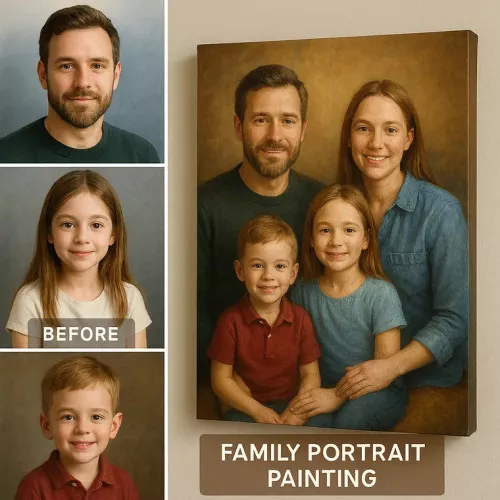
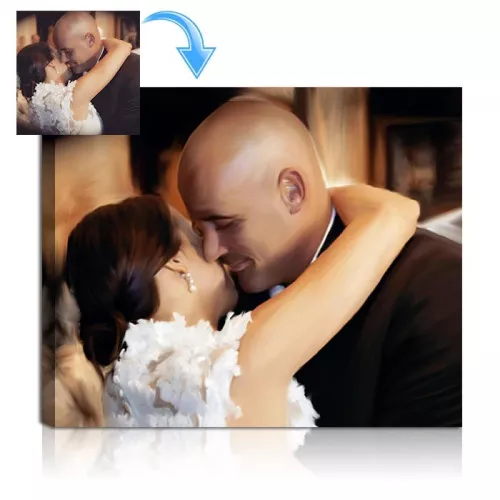




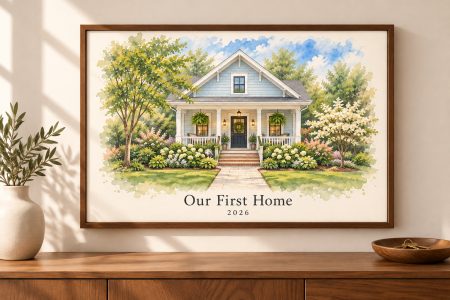
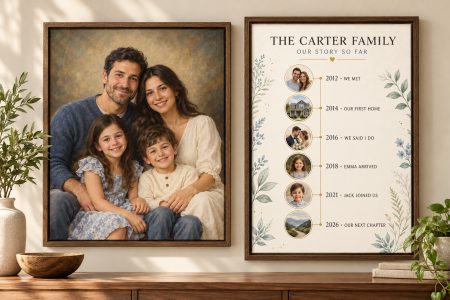

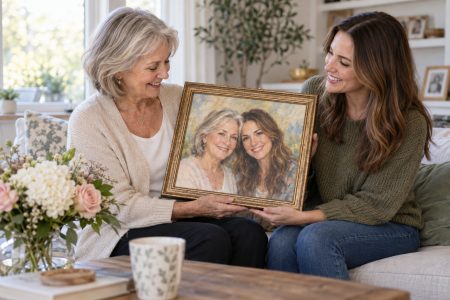

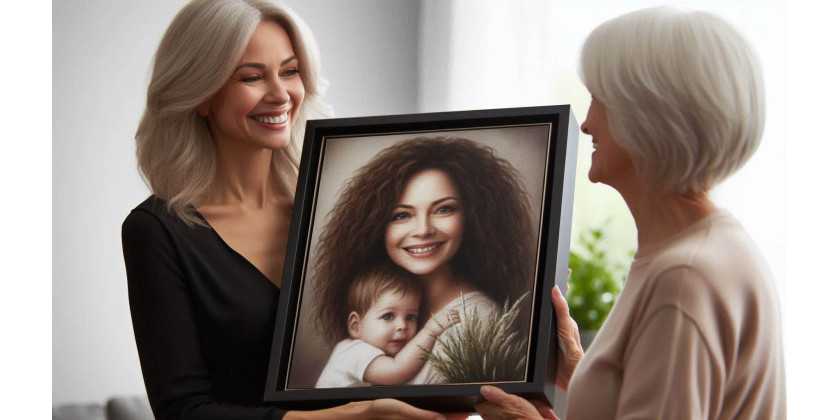




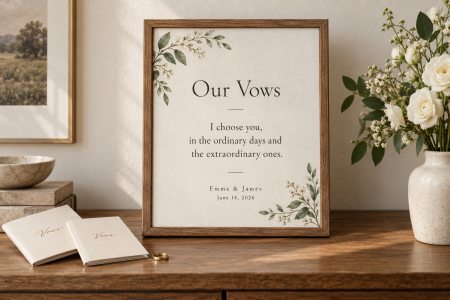

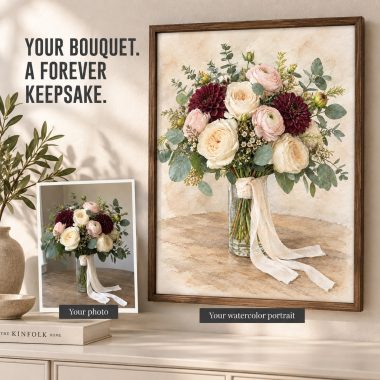


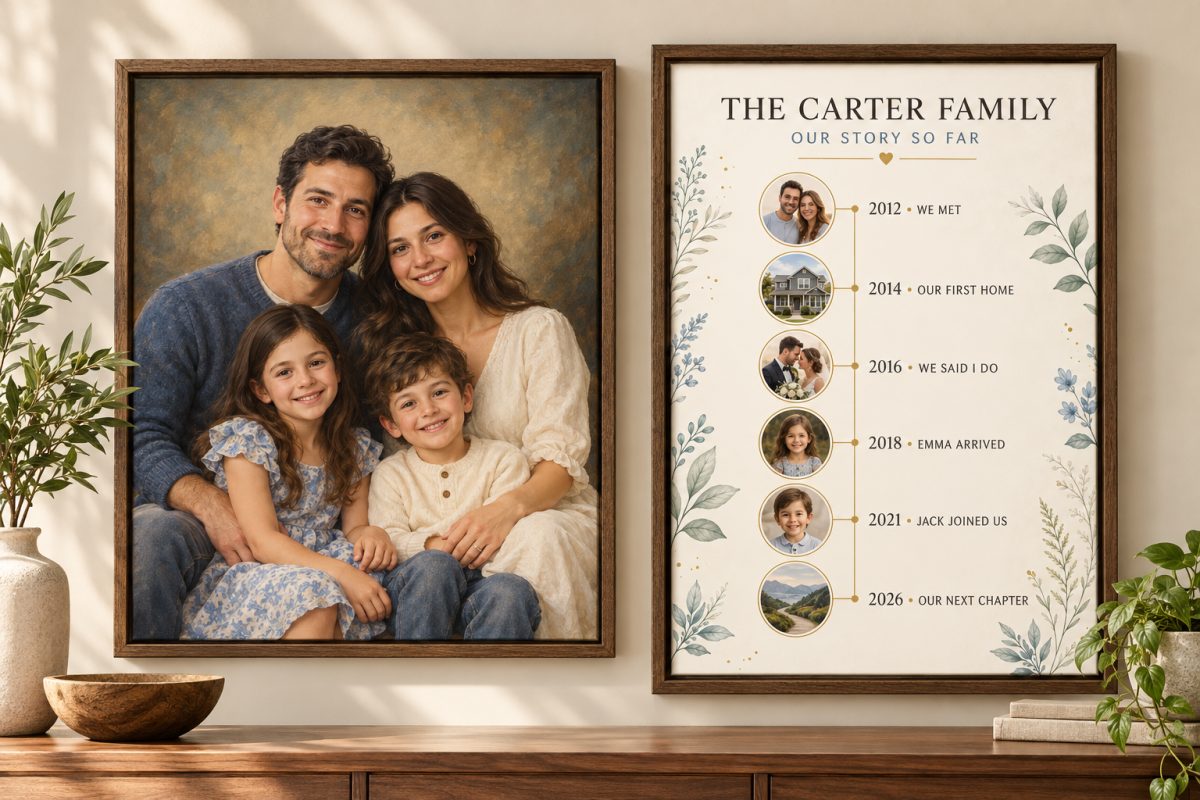
Lead image: AI-generated editorial examples, not customer orders. The timeline follows a product design example; names, dates and scenes are illustrative.
THE PEOPLE YOU LOVE. THE STORY YOU SHARE.
Choose what the gift should say first
A family portrait and a family timeline can both be personal wall art, but they tell different kinds of stories. A portrait puts the people at the center of one composition. A timeline connects meaningful chapters across the years.
Start by finishing this sentence: “I want them to see…” If your answer is “everyone together,” explore a custom family portrait painting. If it is “the life we have built,” a Personalized Family Story Timeline Canvas may express that more directly.
A family portrait brings the people together
A portrait makes faces, expressions and the relationships between people the main subject. It can suit a gift for parents or grandparents when the emotional point is seeing the family represented together. It does not need a date or a written explanation to make that connection.
SnappyCanvas's Family Portrait Painting can use one photo or several separate photographs. That is useful when the best reference for one person comes from a different occasion. The request still needs a clear plan: who belongs in the picture, which photograph defines each person and which age or appearance you want represented.
Combining references is different from documenting a moment when everyone was physically in the same place. If that distinction matters to the recipient, consider whether you want an imagined shared composition or a piece that keeps different chapters visibly separate. For photo-combining advice, use our guide to combining multiple photos into one painting.
A timeline connects the chapters
A family timeline makes the sequence part of the artwork. Meeting, a first home, a wedding, a meaningful move or another family chapter can each have a place. The dates and short captions explain why the moments belong together, rather than asking one portrait to communicate the whole history.
The Family Story Timeline Canvas supports up to six milestones, and you can use fewer. Photos are optional, so the design can include chosen images, places or symbols, or use a text-led approach. Its current design styles are Modern Minimal, Watercolor Botanical and Vintage Storybook.
That can suit an anniversary or a celebration of a new chapter when the story across time is the main point. You do not need to follow a standard sequence of marriage, house and children. Choose the events that reflect the actual people receiving the gift. Our family milestone planning guide helps you shortlist those chapters without trying to include everything.
Choose a portrait when…
The faces together are the message. You want one composition centered on the people.
Choose a timeline when…
The chapters are the message. You want dates and captions to connect moments across time.
Compare what you need to prepare
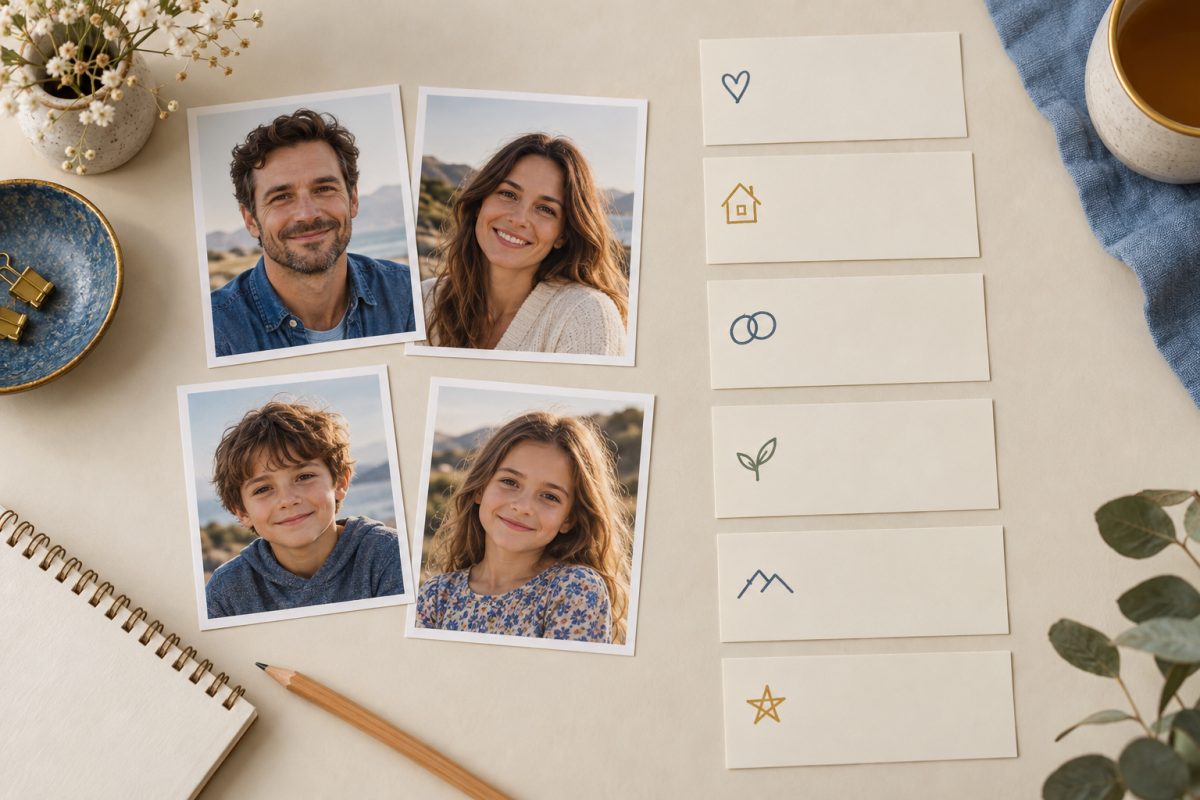
Both choices benefit from clear instructions, but the starting materials differ. A portrait needs useful likeness references. A timeline needs verified milestone information, even when you decide not to use photographs.
| Plan first | Family portrait | Family timeline |
|---|---|---|
| Main focus | People together | Chapters over time |
| Starting point | Clear face references | Dates and short captions |
| Photos | One or separate photos | Optional |
| Proof | Select the optional E-Proof | Included |
Product descriptions and options checked October 27, 2026. Confirm the current configuration when ordering.
Let the recipient's habits guide the choice
Think about how they enjoy family memories. Someone who keeps photographs of the whole family beside their chair may value a portrait's immediate recognition. Someone who loves telling the story of the first home or a memorable move may appreciate dates and captions that invite that conversation.
These are starting points, not rules about age or family role. Ask a person who knows the recipient's home if you are unsure. Avoid choosing the format solely because you have many photos: a small set of clear references can support a portrait, while a timeline can work without a photo for every milestone.
For sensitive stories, check what the recipient would want displayed. Do not assume a difficult event, a precise personal date or an old photograph should become part of public-facing wall art simply because it belongs to the family's history.
Measure the display area before choosing the size
A portrait needs room for the faces and the intended composition. A timeline needs enough space for dates and captions to be comfortable to read. More content does not always mean a better gift; shortening captions or selecting fewer chapters can make a timeline easier to enjoy.
The timeline currently offers canvas sizes from 11×14 to 24×36 inches and portrait or landscape orientation. The Family Portrait Painting lists sizes from 11×14 to 40×60 inches. Check the actual arrangement before assuming a particular size is right. Both list rolled canvas, Deep Gallery Wrap and black, white or brown frame finishes.
Compare the configured price for the size and finish you want, rather than comparing two starting prices. Rolled canvas leaves stretching or framing to arrange separately. For presentation and total-cost questions, read our canvas finish comparison.
Review the proof for the kind of story you chose
The Family Story Timeline Canvas includes a digital proof. The Family Portrait Painting offers an E-Proof option; select Yes if you want to review before production. SnappyCanvas offers free unlimited artwork-proof revisions before approval.
For a portrait, check each person's likeness, the chosen references and the composition. For a timeline, check names, dates, event order, caption spelling and image assignment. Review the overall spacing after checking the individual details. Our portrait proof checklist can help you organize feedback.
For a dated gift, confirm the current estimate for the selected options and destination, and allow time for review and any revisions. The choice between formats should come from the story you want to tell, not an assumed delivery promise.
Choose one clear message
Bring the people together, or connect the chapters that made the family. Either can be meaningful when the details belong to the recipient.