Shopping Cart

 Products







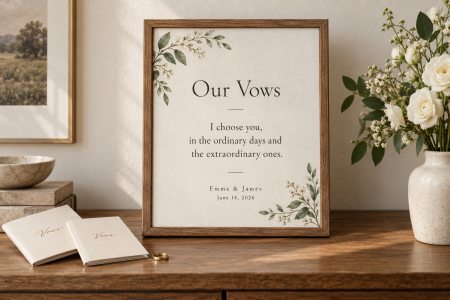
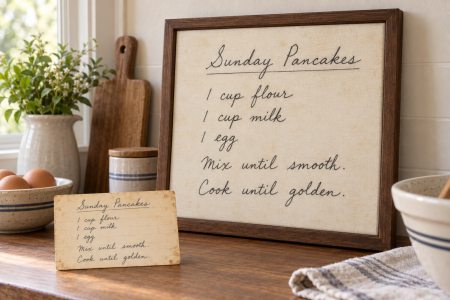



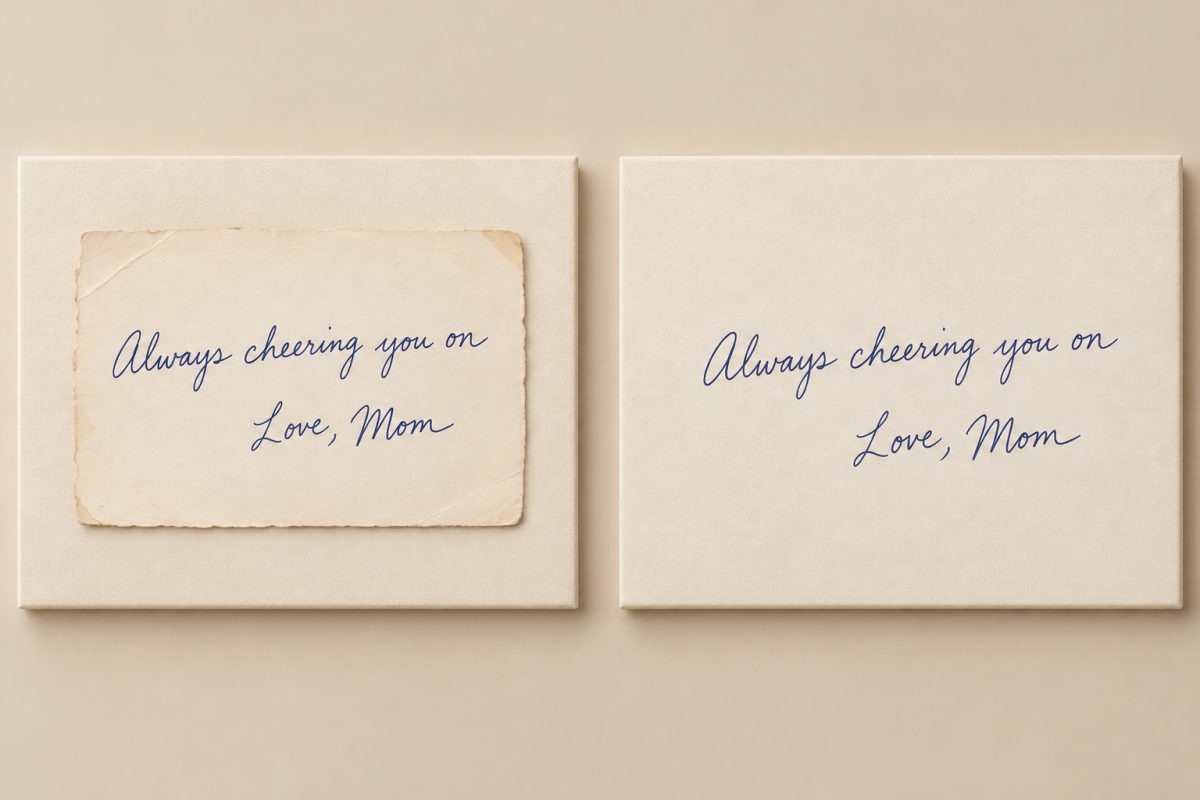
A few handwritten words can feel more personal than a long quotation. The familiar loop of a letter, an uneven line or the way someone signs their name can bring a note's author to mind before you even read the message.
If you want to turn a loved one's handwriting into wall art, start by deciding what you want to preserve: the whole card, a short passage or a message with its signature. Those choices shape the layout and help keep the finished keepsake connected to the original.
Lead image: AI-generated illustration using an invented sample message. It is not a customer order; the frame and room presentation are illustrative.
Choose words that stand on their own
A birthday card, a letter tucked into a book or an everyday note may contain a phrase you would enjoy seeing often. Read your chosen excerpt outside the rest of the letter. Does it still make sense? Does it sound like the person who wrote it?
A short message gives the handwriting room to remain recognizable. If a longer letter matters as a whole, do not assume it must all fit on one small canvas. Consider whether a favorite passage belongs on the wall while a digital copy preserves the complete letter for reading.
Keep enough context to preserve the meaning. Removing a sentence's beginning or joining words from unrelated lines can change the tone. If you want a combination of excerpts, identify them clearly and ask whether the arrangement can be accommodated before ordering.
Decide between the whole note and the handwriting alone
The whole-note approach preserves the appearance of the card or page as well as its words. The paper's edges, an underline or a small doodle can be part of the memory. It suits a note whose physical character is meaningful.
A cleaner arrangement gives more attention to the message and signature. It may lighten distracting background marks or allow more open space around the writing. Explain that you want the original handwriting's character preserved, rather than replaced with a lookalike font.
The SnappyCanvas Handwritten Recipe Canvas accepts handwritten letters and meaningful notes as well as recipes. Its product guidance describes preserving handwriting's personality while cleaning up distracting marks and arranging the artwork for the chosen canvas shape. Include any special layout request with your reference so its feasibility can be checked.
Capture the original without hiding small details
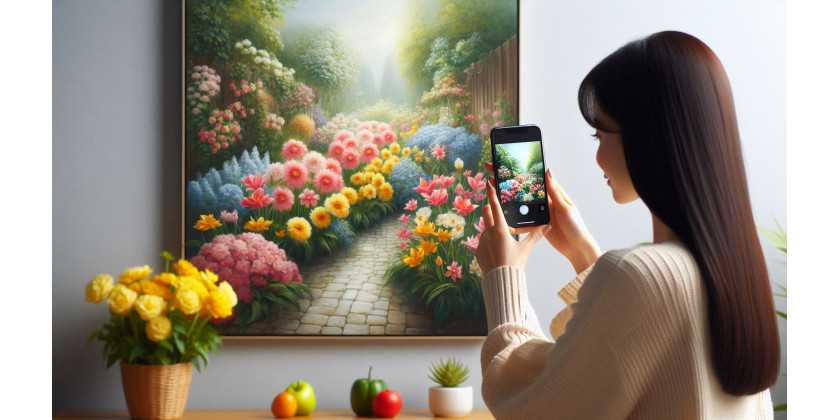
Photograph the note flat in even light, with the camera facing the page squarely. Keep your phone's shadow out of the image, avoid glare and leave space around the edges. A clear scan is another useful starting point. Keep the original document and a separate digital copy.
Before uploading, zoom in on the signature and the smallest words. Can you distinguish the dots, crossed letters and punctuation? A photograph that looks clear at phone-screen size may still hide a faint word. Send the original image file where possible, rather than a screenshot or repeatedly compressed copy.
If the note continues on the back, capture both sides and label their order. If you are selecting only part of a longer page, send the complete reference as context and explain exactly where the excerpt starts and ends. Avoid marking or drawing over the original handwriting to identify your selection.
Explain what should stay, not just what should disappear
A tidy background is not always the most faithful result. A crossed-out word, an affectionate nickname or a little heart beside the signature may be the detail you would miss most if it vanished. Separate those meaningful marks from distractions such as a shadow in the photograph.
“Please use the final two lines and the signature. Keep the small heart beside the name and preserve the original letter shapes. A cleaner background is fine, but please leave the handwritten underline.”
This is a sample instruction, not a customer story. Adapt it to your own note. If a word is faded and you know what it says, supply a transcription and identify its location. If you are unsure, say so. Cleanup cannot establish words that are no longer visible, and a meaningful message should not depend on a guess.
Give the signature and margins enough room
The signature often carries as much meaning as the message. Keep it in the initial layout decision rather than treating it as something to squeeze into a leftover corner. Check whether a vertical or horizontal arrangement better follows the original lines.
Measure the intended display area and consider the distance from which the writing will be read. Dense text needs more space than a brief note. Ask about layout before selecting a size if you are trying to include several paragraphs or both sides of a card.
Names, dates or small illustrations can be requested on the handwriting product when they fit the artwork. If you add context, make it clear which words came from the original and which were added later. An accompanying gift card can explain the story without crowding the canvas itself.
Review the proof as handwriting, not only as text
The handwriting canvas includes a proof and allows reasonable adjustments before production. Compare it with the source in two passes. First, read every word and check punctuation, names and the chosen excerpt. Then look at the handwriting itself.
- Does the signature retain its recognizable shape?
- Are meaningful underlines, doodles or corrections still present?
- Has any faint writing disappeared into the background?
- Is the message comfortably placed, with space around the edges?
- Are requested additions accurate and distinct from the original note?
Make revision notes specific. “Please keep the underline beneath the final word” is easier to act on than “make it more authentic.” For an uncertain word, return to the source rather than approving a reading simply because it looks plausible.
Make the gift personal to its recipient
A handwriting keepsake can celebrate an everyday relationship, a milestone or a memory. Choose a message the recipient will welcome seeing. A private or emotionally significant letter may call for a conversation before it becomes wall art, especially if it involves someone else's words or a recent loss.
You do not need to share the complete letter or the finished artwork publicly. If you want to post a photograph of a gift, ask the people whose personal message is visible first. The value of the keepsake comes from its meaning to the recipient.
Common questions about handwritten-note wall art
Can the recipe-canvas product be used for a letter?
Yes. The live product page lists handwritten letters and meaningful notes among its accepted references. Explain which passage you want and any layout preferences with the upload.
Does old handwriting have to be perfectly clear?
The product guidance says older, faded or lightly stained originals can often be improved, but important handwriting should remain visible. Send the clearest reference available and review the proof carefully.
What if the keepsake is a handwritten recipe instead?
Recipes require extra attention to quantities, fractions and instructions. Our handwritten family recipe wall-art guide covers those details.
Explore the personalized photo gifts collection, or start your handwriting canvas with a clear copy of the words you want to keep close.